Earth
Clay is selected for character rather than uniformity. Its mineral memory remains visible in the fired surface.
Clay is already alive. The artist’s work begins by listening for where it wants to go.
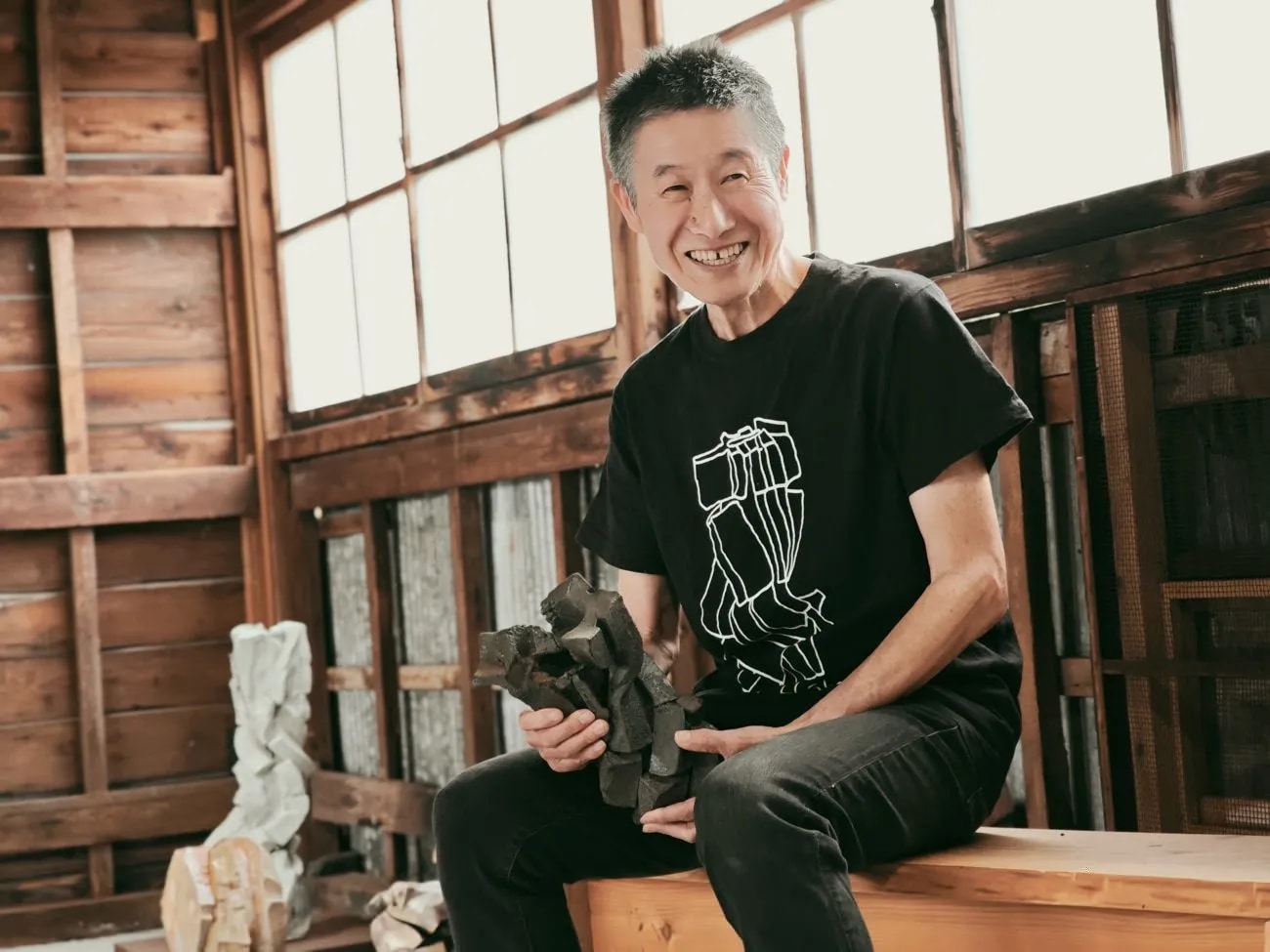
I have never thought of myself as the maker of these forms. Clay is already alive when it reaches my hands — I only listen for where it wants to go.
On the wheel I give it a turning force, then work against that force, twisting, until the vessel arrives at a shape neither of us intended.
This is what I mean by yui-shizen: nature made into art, and art returned to nature.
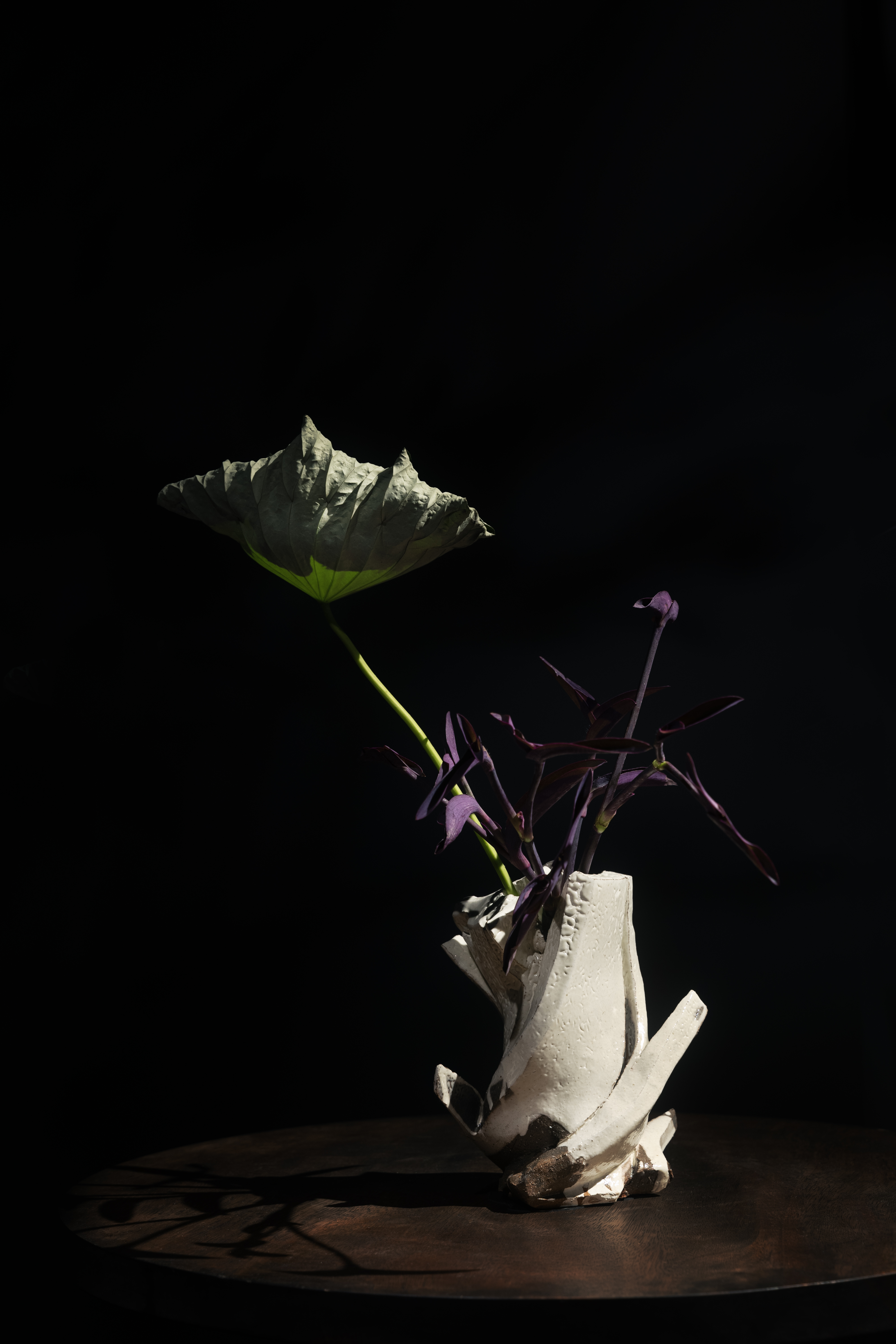
自然を芸術へ、
芸術を自然へ。
Born in Toyako, Hokkaido, in 1953, Shozo Michikawa graduated from Aoyama Gakuin University in 1975. After working in Seto, he established his practice in Sasama, Shizuoka, and has presented his sculptural ceramics internationally.
Clay is selected for character rather than uniformity. Its mineral memory remains visible in the fired surface.
The wheel generates centrifugal force. Instead of perfecting symmetry, the form is pushed against that movement.
Edges fold and volumes split. Each gesture remains legible, like a record of pressure in geological strata.
The Sasama anagama is fed with pine for seven days and nights. Ash, flame and atmosphere author the final skin.
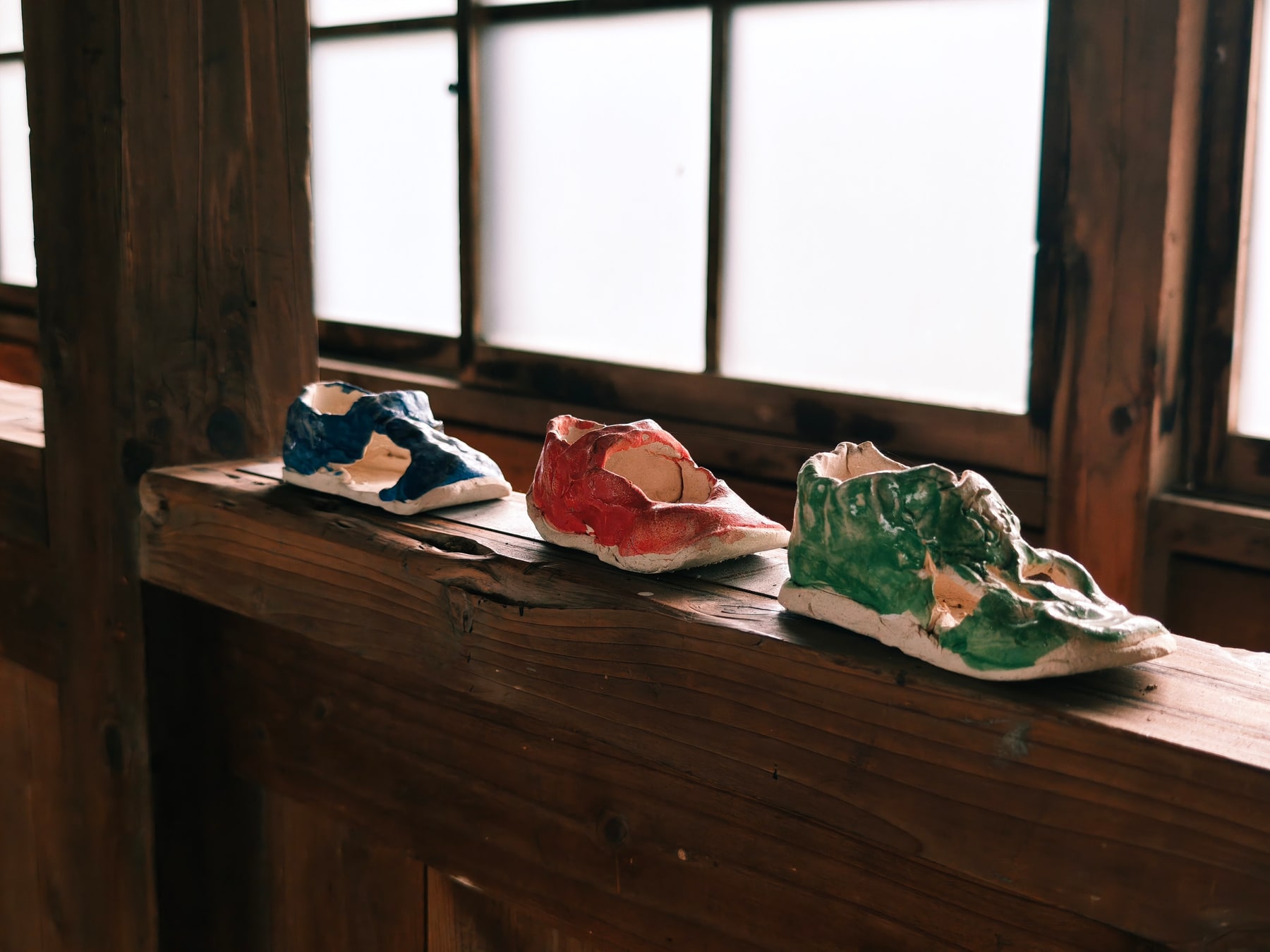
When the fire cools and the door is opened, what emerges is never exactly what entered. The work is received rather than expected.
View the worksSasama, Shizuoka
Japan